Tuesday, November 10, 2015

Little Did I Know...

Little did I know that shortly after taking this picture of a giant haystack in the fields above Chanaute that a short time later I would be helping to build one, but that is exactly what happened.


I'd already had the opportunity to help with threshing the week before, which is where you grab a bunch of rice stalks that have been tied together and allowed to dry out over several days and then whack the stalks 3-4 times against the ground to loosen the rice grains. After threshing a few hundred bunches you end up with a large pile of rice that is then collected in 40 kg bags (roughly 80-90 lbs) which are then hauled away on the backs of the workers to be processed.
Needless to say, I didn't do any of the heavy lifting, but the threshing alone is hard work after you have done it for the hundredth time (they let me off the hook after about 10 bunches, probably because I wasn't very good at it).
After clinic ended today, I was invited to Copola's home for tea. When I arrived, her husband and another relative were building a haystack and they asked if I wanted to lend a hand. Below are some pictures of me in action!


- Posted using BlogPress from my iPhone

Sunday, November 8, 2015

Tahir Festival

As my time in Chanaute comes to a close, I'm departing during another festival in Nepal. Much like our two biggest holidays, Thanksgiving and Christmas, come in quick succession, the same holds true for Nepalis of Hindu descent.

Here is a summary of the 5 day Tahir Festival that begins on Wednesday from the website "We All Nepali". The pictures in this post are taken from the web to give a little context. If I have the opportunity to take my own I will add them later.
http://www.weallnepali.com/nepali-festivals/tihar

Tihar is the five days celebration in Yama Panchak.

Tihar is the most celebrated festival after Dashain in Nepal. It is a five-day festival celebrated in late autumn. It has its unique ways of celebration.


The Five days of Tihar


Kaag Tihar - Crow Pooja

Kukur Tihar - Dog Pooja

Gai Tihar or Laxmi Pooja – Cow or Goddess of Wealth Pooja

Goru Tihar, Govardhan Pooja, Maha Puja, (Aatma pooja) – Ox Pooja

Bhai Tika, Bhai Dooj - Bother and Sister Pooja

Story behind Tihar

There are various stories about the celebration of Tihar. One of the famous stories behind the celebration of tihar is related to Yama the god of death and his sister Yamuna. Yama had been staying away from his sister for a long time. His sister wanted to meet him so she asked various sources to visit him and ask him to give her a visit. She sent crow, dog, and cow and at the end she went herself to see her brother. She worshipped him with tika and flowers, she put him five colored tika. Yamuna made a circle with mustard oil, Dubo Grass (Cynodon Dactylon) and put Makhmali Mala (Globe Amaranth) and asked Yamaraj not to go till the oil, Dubo Grass and the flower gets dry. Therefore, every sister worships her brother keeping him in the circle of mustard oil, putting mala (garland) of Makhmali flower and Dubo grass.

How is Tihar Celebrated

First day - Kag Tihar (Crow Puja)

On the first day of Tihar, crows are worshiped and fed early in the morning. People leave different food items outside for crows to eat. Crow is considered to be the messenger of death. People believe the crow gets the messages to the house in the morning. People worship it to bring good luck themselves.

Second day - Kukur Tihar

The second day of tihar is dedicated to the most loyal friend of mankind. Kukur, the dog, Puja is done by putting a red tika on dog’s forehead and flower garland around the neck offering him foods and sel roti. Generally male dogs are worshiped. It is said dogs can see endangers and the death coming.


Third day – Gai (cow) Puja and Laxmi Puja

On the third day of tihar Cows are worshipped in the morning. Cows are worshipped with sesame oil light, garland of flower and red color (abir). Wheat flour, sel roti, rice and dal are feed to cows. Disciples try to pass in-between four legs of the cow. Cow is regarded as mother in Hindu religion, as we grow up drinking her milk. Some consider cows as Goddess Lakshmi, the goddess of wealth and prosperity.

In the afternoon we clean our houses, paint floors with Red Mud (Rato Mato) and cow dung (gobar). Small circle are made in front of the main gate and decorated with colorful designs. Some people call it rangoli.

Small designs of footsteps are painted from the main entrance to the puja kotha. These footsteps are believed to be the footsteps of goddess Lakshmi. Candles or pala are lit all over the house making it bright and beautiful.

There is a long tradition of going house to house in the evening singing songs to ask for money and foods. Generally girls and kids go out to neighbors and sing traditional songs. The tradition is called “Bhailo” and songs are called Bhailini songs.

The song starts with “Bhailini aain agana gunyo cholo magna, hey ausi ko din gai tiharo bhailo”. Badali kudali rakheko, laxmi pooja gareko, hey ajako dina gaitiharo bhailo…” Meaning Bahilini are at your door to ask for a gunyo cholo (Nepali traditional dress), today is no moon day and Cow pooja and Bhailo day, the house is clean and you have done Lakshmi puja, today is cow pooja day and Bhailo”

Fire crackers are blown up on this day. People play cards in Laxmi puja to welcome goddess Laxmi in the night. People believe, laxmi comes to the house which is clean and bright.

In the evening the goddess of wealth Lakshmi is worshiped by lighting numerous lights and lightening works. It is believed that by worshiping Laxmi and pleasing her in return she gives us wealth. People worship wealth and food store this day.

Fourth day – Goru Tihar (Govardhan parbat ko puja) and Mah (aatma or self) Puja

On Govardhan puja Goru Tihar, three different Kinds of puja are performed. We perform Goru Puja, or worship Oxen. We also perform Govardhan Puja, which is done by making a hill of govardhan parbat using Cow dung. Cow dung has big importance in Hindu culture. In the old days it was used for everything from light at night (Methane) to polish mud floors of traditional houses. Still now no Puja is complete without cow dung in Nepali Hindu culture.


In this night Newar community perform Maha Puja also known as self-puja. It is done to purify our body. In this puja a Mandap decorated with Saipatri (marigold flower), sweets and fruits and a special Mala (garland) which is made of thread is kept. Each member of the family has one Mandap. A female member of the family offers the person sitting on the Mandap a Sagun with her hands crossed. Shagun usually consist of fried eggs, fruits, sweets, meat, fish, lentil and pastries. In the left hand with egg and fish and in the right hand Rakshi (homemade alcohol). This day is also the beginning of Nepal Sambat, Newari New year.

In the evening many Nepali children and young men go house to house singing Deusi song (Aahai bhana mera bhai ho deusi re bhana na bhana deusere). Deusi is very similar to Bhailo. Bhailo is primarily for female and Deusi for male. However, now a days there is such distinction. People go in group with males and females members to celebrate Bhailo and deusi both.

Fifth Day: Bhai Tika or Bhai Duj

The fifth and last day of Tihar is Bhai Tika. This day sisters put “Tika of five colours” Paanch Rangi Tika - Yellow, green, red, blue and white on forehead of her brothers, to ensure long life and pray to Yamraja for her brother’s long life and prosperity. Sister offers brothers Shaguns of dry fruits and nuts, especially walnut, hazelnut (Katus), fruits and sweets and in return the brothers give their sisters gifts and money. The brothers also put Pancha Rangi Tika to sister and bow her on her feet and assure her to protect her till the end of life.

On this day, Rani Pokhari Temple (located at central Kathmandu) is opened for those who do not have any brother or sister. This is the only time in a year the temple is open to general public.

Story and legends behind Bhai Tika

A legend has it that while performing ‘brother worship’ the messenger of Yama Raj came to collect the soul of the man going through ‘brother worship’, as the lifetime of the man has expired in the human world. However, a sister performing ‘brother worship’ has requested the messenger to wait until she completes the ‘brother worship’.

The smart sister invited the messenger to sit along with the brother and get the honor of ‘brother worship’. The sister did ‘brother worship’ so well to the messenger that he became very pleased with her and asked her anything she wished to have as a gift. The wise sister asked the messenger for a long life of her brother. Thus, she saved the life of her brother.

Another story about how the ‘brother worship’ has started is that Yama Raj has five days off, as Lord Vishnu gave the boon of ruling the three worlds for five days to Bali Raja. Lord Vishnu has tricked Bali Raja to go to a lonely dark world for his meritorious act that has shacked the heavenly kingdom of Lord Indra. So, Lord Vishnu has granted him to rule all three Hindu worlds for five days in addition to agreeing on guarding Bali Raja for four months. Yamaraj’s world is one of the three worlds. So, he went to visit his sister, as he has not visited her for a long time.

Seeing her brother, Yama Raj, sister Yamuna became so happy, she did not know how to welcome the brother who has visited after such a long time. So, she did every possible thing to keep her brother Yama Raj happy for five days. On the last day, before going back to his world, Yama Raj made the presentation of a unique gift to his sister in return for her hospitality. We believe that she has set the tradition of ‘brother worship.’

So, we call the five days of ‘Tihar’ as ‘Yama Pancak’ means the five days of Yama Raj. On these five days we do everything possible for keeping Yama Raj happy, as Yama Raj is going to judge our vices and virtues after our death, and treats our souls accordingly.

Happy Deepawali to All !!!


- Posted using BlogPress from my iPhone

Friday, November 6, 2015

Burrrrr!

The weather here in Chanaute is beautiful this time of year. Most days are sunny to mostly sunny with temperatures in the high 60's as you can see from this weather app forecast of a nearby town:


The challenge of living here is that I live in a steel box that is always open to the great outdoors. At night, the temperature is now dropping into the high forties. This morning, my little thermometer registered a brisk 8 degrees C/46 degree F. While I'm plenty warm in my sleeping bag with the extra blanket that Bina provided me, getting out of bed definitely wakes you up!


The real challenge for me since it's gotten colder has been the evenings. Once the sun goes down and the temperature drops into the 50's, it's quite cold and since there is not much to do in the evenings other than read, listen to music or an audiobook, it's quite chilly sitting on my bed even though I've got multiple layers on. There is no fire or heater in my little room or anywhere in the temporary clinic. There is a butane stove for cooking in the kitchen but all the heat quickly goes out the gap between the walls and the corrugated steel roof.
Of course, it's hard to complain as Bina lives with these conditions year round (as do many of people of Chanaute) and I'm sure it will be much colder a month or two from now. Needless to say I think they are all thicker skinned than I am. While I've got two pair of wool socks on at night, Bina is wearing sandals with her bare feet exposed.
While I'm going to miss Chanaute when I leave next week, it will be nice to get back to Jerry's and my warm cozy condo!

- Posted using BlogPress from my iPhone

Sunday, November 1, 2015

Natural Born Trekker

No, I'm not talking about myself. I love to trek and have been fortunate to trek/hike throughout many of the U.S. states, Canada, New Zealand and now Nepal. But my love of hiking didn't begin until I was an adult.


Karki, my 13 year old guide is the one who I think is was born to trek (whether he does it professionally as a guide or more likely just recreationally is up to him). In one of my prior posts I referred to him as part mountain goat, part jack rabbit, because of the way he easily treks up the steep trails we have ventured up. We have now done three hikes over the past four weeks, with each hike going further and higher than the last. Today we hiked straight up the ridge of the mountain east of Chanaute to Kakani and then down past Palchok and then back to Chanaute. The trail map below shows our return route, but not the steep direct route we took to Kakani.


It's been fun watching Karki's interest in trekking grow each week as we have sought ever more challenging treks from our initial 3 hour trek with Suman, followed by our longer steeper 4.5 hour trek the following week, to our all day 7 hour trek today with a stop for lunch in Kakani. Today's trek even surpassed my treks in Pokhara as we hiked up 283 flights (almost all of those on the way to Kakani), took over 25,000 steps and covered 11.4 miles. At the start of today's trek, Karki showed up wearing his new hiking shoes (he had been using flip flops on our first two hikes), which I thought was awesome because it shows his interest has grown and I know he will use them to continue trekking long after I return home.


While I've been talking about Karki, I want to add that Suman joined us just as we were departing for today's hike (I think his parents pressed him to join us because he didn't jump up to join us right away when first invited, but rather ran after us after we got a hundred yards down the road). Twelve year old Suman, like myself, does not have the jack rabbit gene. In fact at this stage of his life he's a little pudgy and enjoys sweets way too much. When we stopped for lunch, he only ate half of his Dahl baht (lentils, vegetables and rice) but added about 5 teaspoons of sugar to his tea and then after lunch had room for a Red Bull and a snack that looked similar to Cheetos. I paid for his lunch, but he bought the latter snacks on his own (afterwards I tried to help him understand that too much sugar is bad for your health). None the less, for only 12 years old, he did a remarkable job of making it to Kakani and back and I suspect he will outgrow his pudginess once he hits his growth spurt and hopefully continues to go trekking and cut down on his sugar.


- Posted using BlogPress from my iPhone

Saturday, October 31, 2015

Robbed (of an extra hour of sleep)

Nepal is one of just a few countries that do not observe daylight savings time. Unfortunately for me, that hour of sleep I gave up earlier this year when we sprung forward will forever be lost while all of you back in the states will be enjoying sleeping in tomorrow. Technically, I'll get it back when I fly home, but I'll be so jet lagged that I won't be able to appreciate it.

Speaking of time, Nepal is also one of the few countries that sets its clock in such a way that they are off by 15 or 45 minute increments from the rest of the world as you can see from this screen capture of various cities in different time locations:


From the brief online research that I've done, it appears this was done intentionally to differentiate Nepal as a separate and sovereign nation from its neighbor India.

As of tomorrow I will be 11:45 minutes ahead of Chicago, which means that instead of just feeling like I'm halfway around the world, I really will be halfway around the world at least from a time perspective (okay, technically I'm still 15 minutes shy of being a true half day away).

For those curious, here is the list of countries or territories that have time zones on the half hour or quarter hour from UTC (Coordinated Universal Time).

India: UTC +5:30
Standard time: India Standard Time (IST)
Daylight time: None
Example city: New Delhi

Australian States:
Australia has multiple time zones. Some of them are half-hour and quarter-hour time zones. Not all states and territories use DST.
Northern Territory: UTC +8:45
Standard time: Australian Central Standard Time (ACST)
Daylight time: None
Example city: Darwin
Eucla: UTC +8:45
Standard time: Australian Central Western Standard Time (ACWST)
Daylight time: None
Example city: Eucla
South Australia: UTC +9:30 / +10:30
Standard time: Australian Central Standard Time (ACST)
Daylight time: Australian Central Daylight Time (ACDT)
Example city: Adelaide
Broken Hill: UTC +9:30 / +10:30
Standard time: Australian Central Standard Time (ACST)
Daylight time: Australian Central Daylight Time (ACDT)
Example city: Broken Hill
Lord Howe Island: UTC +10:30 / +11:00
Standard time: Lord Howe Standard Time (LHST)
Daylight time: Lord Howe Daylight Time (LHDT)
Example city: Lord Howe Island

Cocos (Keeling) Islands: UTC +06:30
Standard time: Cocos Islands Time (CCT)
Daylight time: None
Example city: Bantam

New Zealand, Chatham Islands: UTC +12:45 / +13:45
Standard time: Chatham Island Standard Time (CHAST)
Daylight time: Chatham Island Daylight Time (CHADT)
Example: Chatham Islands

Canada, Newfoundland: UTC -3:30 / -2:30
Standard time: Newfoundland Standard Time (NST)
Daylight time: Newfoundland Daylight Time (NDT).
Example: St. John's
NOTE: Only the island of Newfoundland and a few regions of Labrador follow NST/NDT. The rest follow Atlantic Time (AST) and Atlantic Daylight Time (ADT).

Sri Lanka: UTC +5:30
Standard time: India Standard Time (IST)
Daylight time: None
Example city: Colombo

Afghanistan: UTC +4:30
Standard time: Afghanistan Time (AFT)
Daylight time: None
Example city: Kabul

Iran: UTC +3:30 / +4:30
Standard time: Iran Standard Time (IRST)
Daylight time: Iran Daylight Time (IRDT).
Example city: Tehran

North Korea: UTC +8:30
Standard time: North Korea Time
Daylight time: None
Example city: Pyongyang

Myanmar: UTC +6:30
Standard time: Myanmar Time (MMT)
Daylight time: None
Example city: Naypyidaw

Venezuela: UTC -4:30
Standard time: Venezuelan Standard Time (VET)
Daylight time: None
Example city: Caracas

Nepal: UTC +5:45
Standard time: Nepal Time (NPT)
Daylight time: None
Example city: Kathmandu

French Polynesia, Marquesas Islands: UTC -9:30
Standard time: Marquesas Time
Daylight time: None
Example city: Taiohae


- Posted using BlogPress from my iPhone


Location:Nepal

Thursday, October 29, 2015

My Halloween Costume (sort of)

I had originally planned to title this post "Darth Vader" although really Hannibal Lecter is probably closer to how I look. That being said, this is not a costume but a means of protecting my lungs from the high level of air pollution while I was in Kathmandu.


I must admit that I felt pretty silly wearing this at first, but I would estimate that approximately 10% of the population in Kathmandu wears some sort of mask to filter out harmful pollutants when they are out and about on the streets. Thus, I gather more attention because of my pale white skin than I do by wearing this mask on the busy streets of Kathmandu. If people knew more about the health risks, the number wearing masks would probably be higher. My guess is that the majority of people wearing these protective masks already have asthma or breathing difficulty that make it necessary to try to protect themselves.

To understand how bad the air quality is, I've posted part of an article below from the Guardian dated March 2014. They had another dire article from April 2015 you can read also if you want to google it.

One topic that is not mentioned in the article and also contributes to the problem is that Nepali's must burn their trash as they do not have trash pickups like we do. Below is a picture of our clinic burning it's trash.


The Guardian Article (excerpt).

Nepal generally evokes images of a pristine mountain nation on top of the world. The thick cloud of pollution that threatens to suffocate Nepal’s largest city, however, provides a stark contrast to this reputation. While there are several environmental crises converging here – severe water shortages, for instance, have become status quo – none is as dire as air quality. In the past 10 years, the number of vehicles on Kathmandu’s streets has risen threefold. The problem has become so acute that many of its 1.74 million residents are left wondering: at what point will their city become unliveable.

Nepal’s air quality ranks 177th out of 178 countries, according to Yale’s 2014 Environmental Performance Index (EPI), better only than Bangladesh. As a physician working in one of Kathmandu’s main teaching hospitals, I see a disproportionate amount of patients with respiratory ailments who are admitted to the wards on a daily basis, the victims of dirty air. Walking to and from work along the crowded, exhaust-choked streets, I sometimes wonder how more people are not sick.

The view from my Kathmandu rooftop certainly seems to bear the EPI findings out. On many days, the relatively close Himalayan mountains are obscured by smog, the brick apartment buildings that form Kathmandu’s skyline shrouded in an oppressive cloud. Those new to Kathmandu frequently complain of sore throats and itchy eyes within a few days of arrival.

“I see rapid changes each time I return,” says Anobha Gurung, a Kathmandu-born doctoral candidate at Yale who is studying the air quality in her home city. “Now it is a common sight to see a gray haze for the valley, especially during the winter months, and city residents venturing out of homes wearing masks.”

Gurung and her colleagues have found that during surges in Kathmandu traffic congestion, the level of small particulate matter can measure over 500 micrograms per cubic metre, or 20 times the World Health Organisation’s safe upper limit. By comparison, the recent smog alarm that led Paris to ban cars peaked at just over a fifth of that level: 110 micrograms per cubic metre.

The sight of Kathmandu residents wearing masks is an increasingly common sight.

Further data is hard to come by. Nepal’s government has several monitoring stations throughout the city, but they have been abandoned for at least six years. Samir KC, a Nepali researcher based in Vienna who has studied pollution and monitoring in Kathmandu, says the monitors were allowed to fall into disrepair. “During our [study], we found that the repair was done and it was up to the government to pay the bill and start the monitoring,” he said. “Nothing happened.”

Most of the research on air quality in Nepal focuses on indoor pollution: cooking fires are ubiquitous in the countryside. In the capital, however, this may be misleading. “Cooking fires are definitely not the cause, as most households use [propane] gas,” says Samir KC. “Suspended particles including dust, exhaust from vehicles and diesel generators are the main culprits.” Of these, it is vehicle congestion that is most strongly correlated to worsening air quality, according to Gurung’s research.

Findings such as these pose a developmental conundrum for governments intent on modernising. It is one thing to stamp out indoor cooking fires as part of the path towards progress. It is quite another, especially in Asian cities that are increasingly oriented around cars, to try to reduce the emissions that come hand-in-hand with industrialisation and urbanisation.

What’s more, modernisation has also fuelled the appetite for electricity, yet infrastructure has not kept pace. Kathmandu endures daily, scheduled “brownouts”. This has had the predictable consequence of driving people to use generators: when the power goes off, their dull roar can be heard throughout the city, pumping yet more toxic fumes into the air.

At present, the Nepali government is either unwilling or unable to make changes. Urban planning of the kind that addresses ecological issues is largely absent. But the situation is not lost on ordinary Nepalis. Daily, newspapers print letters decrying the situation and demanding better from elected officials. Air quality is a frequent topic of conversation here; facemasks are so commonplace, they are now sold in trendy designer styles made of patterned cloth. Other people use scarves to shield their faces.

In the hospital, for the time being Ajay continues to gasp for air. For smokers with COPD, one of the only effective interventions that improves longevity is to quit smoking. But Ajay and those like him have no cigarettes to give up. The air they breathe is making them sick. For them, the question of whether the city will become unliveable is moot. It already is.


- Posted using BlogPress from my iPhone

Friday, October 23, 2015

Final 24 Hours in Pokhara

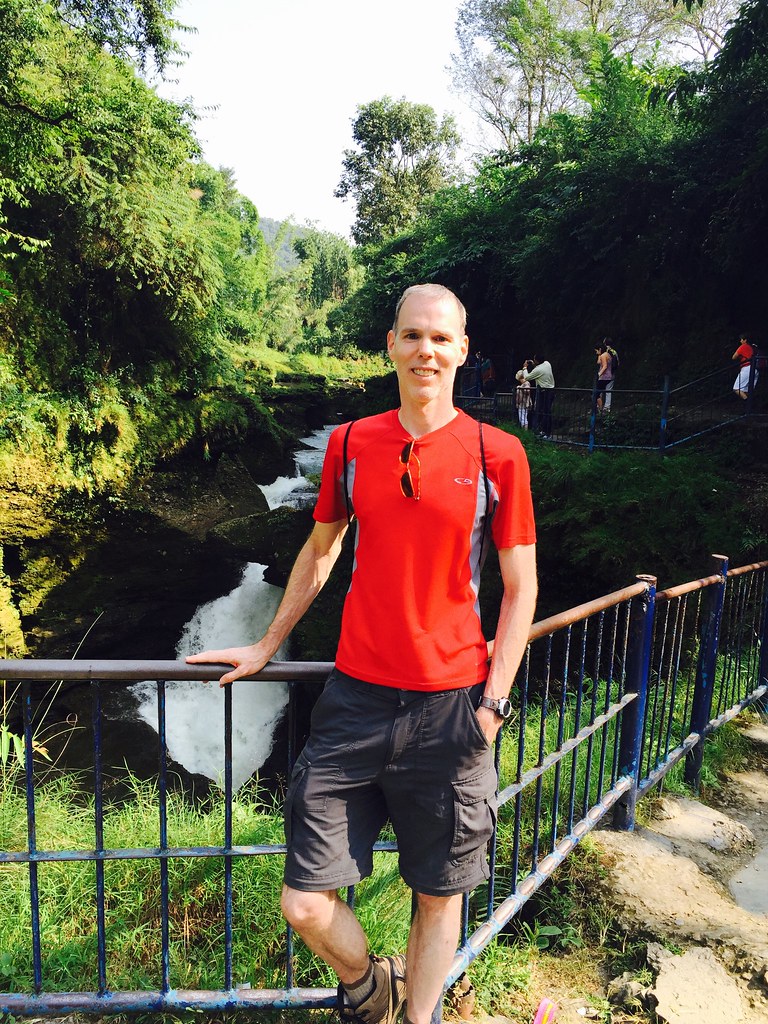
My time has run out quickly here in Pokhara but in the past 24 hours I was able to check out Devi Falls then make my way over to the International Mountain Museum.


The museum has exhibits on how the Himalayas were formed; the different Sherpa tribes and info on their culture; the 14 peaks in the world that are over 8000 meters and who and when were the first ascenders to summit them; as well as the impact of climate change and especially the effects of black carbon on the Himalayas. Before I went to the museum, I read some reviews which were almost all positive, but one person commented that they felt like the admission price was high for what you got. I spent about 2 hours in the museum and the cost was $400 NPR or roughly $4 USD. I'd say it was quite a bargain.


Quick summary on black carbon is that it comes from the burning of any fuel source that does not fully combust, like firewood or diesel fuels. Much of the black smoke you see here in Nepal ultimately settles on the Himalayan snow which causes it to warm faster (black absorbs light, white reflects it), thus causing the snow or glaciers to melt faster.
I also uploaded a couple of short video snippets from the museum showing how India was once it's own separate continent and when it slammed into Eurasia, the Himalayas were formed, which is the youngest mountain range on the planet.

You can cut and paste this link if you wish to check them out. https://www.youtube.com/user/chiguydave1/

This morning I got up early one last time to take a ride up to Sarangkot to see one final sunrise over the Annapurna range as well as a view over Pokhara and Lake Phewa (which you can't see from the Australian camp) before heading to the airport for my flight back to Kathmandu.


- Posted using BlogPress from my iPhone

Location:Baidam Rd,,Nepal